
United Breweries Limited: Crafting India’s Celebration
From Tradition to Tomorrow’s Cheers


Picture a lively evening in an Indian home where every celebration resonates with laughter and clinking glasses. At the heart of these moments is United Breweries Limited, a company that has woven itself into the fabric of India’s social life. What started as humble beginnings has grown into a vibrant story of innovation, premiumization, and relentless passion for brewing good times. Whether it’s the iconic Kingfisher or the sophisticated Heineken, UBL is not just pouring beer—it’s creating memories, standing tall as the king of Indian breweries, ready to toast to the future with every bottle opened.
Business outlook
United Breweries Limited (UBL) stands at the forefront of India’s beer industry, confidently navigating a market that’s constantly evolving. Their business outlook is vibrant and optimistic, driven by a strong belief in India’s growing affinity for premium beverages. Think of UBL as the master brewer orchestrating a dynamic celebration, where every region’s tastes and preferences come alive with booming demand.
In this ongoing story, volumes are climbing steadily, with an 11% increase driven largely by thirsts in southern and western India. The premium portfolio is the star performer, surging by 46%, reflecting UBL’s keen focus on high-quality, aspirational brands like Kingfisher Ultra and Heineken Silver. Through carefully calibrated pricing strategies and an ever-improving product mix, UBL is not just chasing growth but capturing profitable gains.
Behind the scenes, UBL is investing thoughtfully—to build new breweries, optimize supply chains, and strengthen distribution channels. They’re closing older units to consolidate efficiency while bringing modern capacity online in high-growth states like Karnataka and Andhra Pradesh.
While raw material costs and regulatory complexities cast short-term shadows, UBL stands ready to shine in the long term. With rising disposable incomes, favorable demographics, and rising premiumization in beer consumption, the company’s vision remains laser-focused on unlocking growth opportunities and sustaining market leadership.
In essence, UBL’s business outlook paints a picture of a company not only thriving in today’s market but strategically preparing for a future brimming with potential and good times ahead.
Business Segment and Revenue Splits
Beer Segment: This is UBL’s core business and captures over 90% of total revenues. The beer segment itself is segmented into:
Mainstream Beer: Includes well-established brands such as Kingfisher Strong and Kingfisher Premium. These products contribute a large portion of volume but relatively lower per-unit value.
Premium and Super-Premium Beer: Brands like Kingfisher Ultra, Heineken, and Amstel Grande dominate this segment. This segment is growing rapidly, accounting for about 20% of value but a smaller volume share, reflecting a higher price point and margin.
Non-Beer Alcoholic Beverages: UBL has a smaller presence in other alcoholic beverages such as whisky, but this constitutes a very minor portion of total revenue and is not their primary focus.
Geographical Revenue: Revenues are geographically spread across India, with the southern and western states contributing the largest share of sales. Key growth markets include Karnataka, Andhra Pradesh, Maharashtra, and Uttar Pradesh.
UBL’s revenue is predominantly driven by beer sales with aggressive premiumization pushing higher value sales from their top-tier brands, while maintaining a stronghold in mainstream segments for volume growth.
Manufacturing Units
United Breweries Limited operates multiple manufacturing units strategically located across India to serve key regional markets efficiently. These breweries are essential to meeting growing demand, optimizing logistics, and controlling costs.
Key Manufacturing Units of UBL
Karnataka: The company’s largest presence is in Karnataka, home to several large breweries, including its famous facility in Bangalore.
Andhra Pradesh: A significant manufacturing unit here serves the southern Indian market and supports volume growth in the region.
Maharashtra: Multiple breweries in Maharashtra help cater to the large western market, including Mumbai and Pune.
Madhya Pradesh: A key facility supports central India’s demand.
Punjab and Rajasthan: These sites support northern and northwestern state markets.
Assam: UBL has manufacturing presence in the northeast, especially Assam, serving the eastern markets.
These units employ modern brewing technology and capacity expansions are underway to boost production volume while keeping cost efficiencies and environmental sustainability in focus.
Effects Due to New Tax Policy
United Breweries Limited has experienced notable effects due to the recently implemented tax policies in India, which have impacted both costs and pricing strategies.
Increased Excise Duties: Several states have raised excise duty rates, leading to higher production costs. This has particularly affected volumes in regions such as Karnataka, West Bengal, and Rajasthan, where increased tax incidence led to slower growth or slight declines in consumption.
State-Level Variances: The lack of uniformity and ongoing changes in state tax policies create complexity in revenue management and inventory logistics, often necessitating inter-state transfers that add further cost and reduce operational efficiency.
Price Adjustments: To cope with higher tax burdens, UBL has implemented selective price hikes in key states. While this helps protect margins, it can temporarily impact volume growth due to price elasticity constraints in some markets.
GST Impact: Although GST uniformity on alcoholic beverages is a long-pending reform, its absence continues to hinder a seamless national market. UBL remains optimistic about eventual reforms that would reduce tax cascades and supply chain inefficiencies.
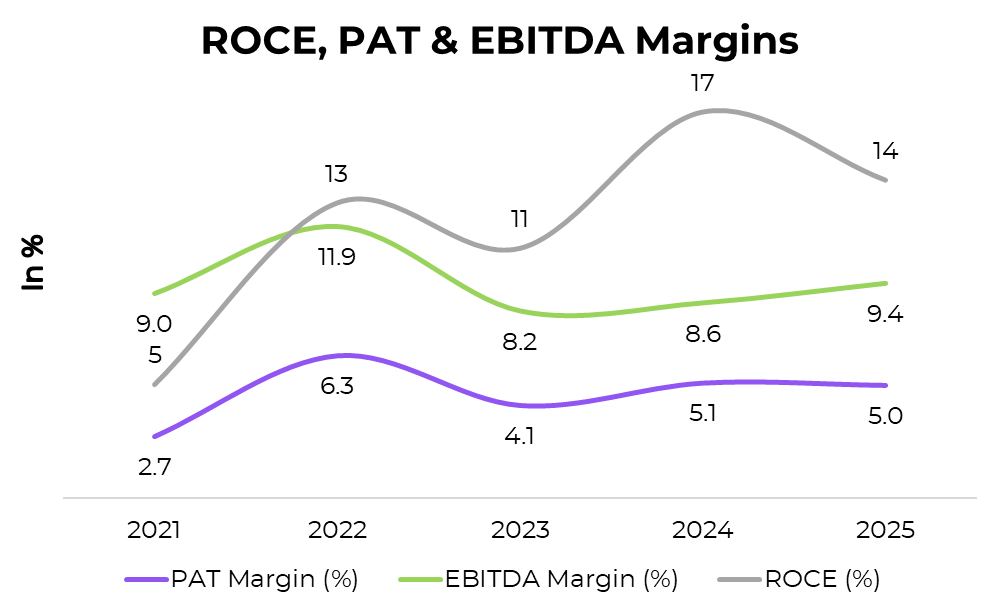
Margin Pressure: Combined tax and inflationary pressures have caused near-term margin compression. However, UBL’s ongoing focus on premiumization and operational improvements aims to counterbalance these headwinds.
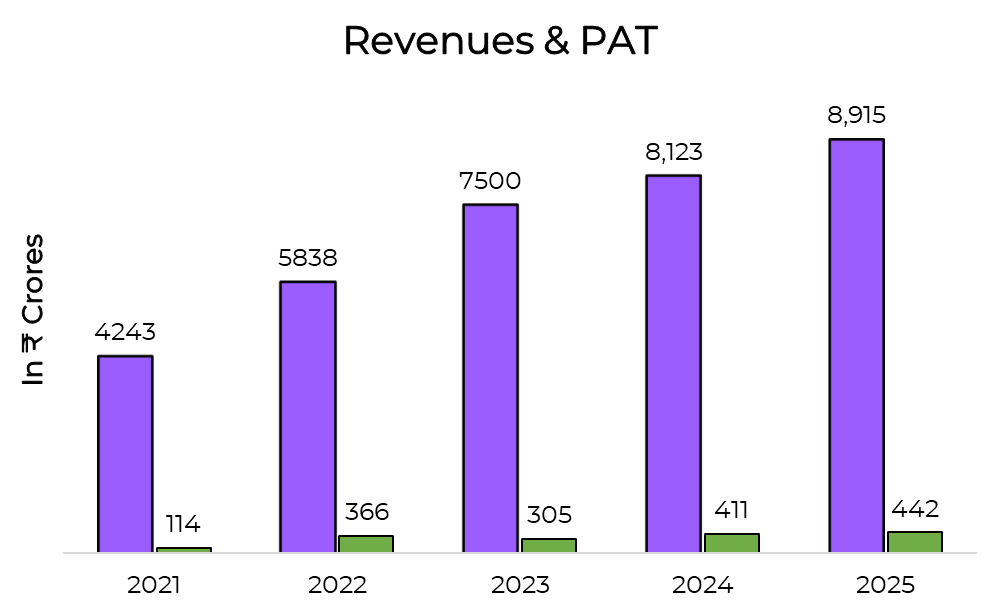
FInancials
Future Outlook
United Breweries Limited’s future outlook is bright, driven by structural growth in India’s beer market and the company’s strategic initiatives.
Sustained Volume Growth: UBL expects continued double-digit volume growth, fueled by rising disposable incomes and increasing consumer preference for beer, particularly premium segments.
Premiumization: The premium and super-premium beer portfolio is projected to expand rapidly, contributing a larger share of revenue and profitability.
Capacity Expansion: New brewery units and modernization of existing plants will support rising demand and improve supply chain efficiencies.
Operational Efficiency: Leveraging technology and cost optimization strategies will help UBL maintain margins despite inflation and regulatory challenges.
Market Leadership: Strengthening brands like Kingfisher and Heineken will ensure sustained dominance in both mainstream and premium markets.
The company is well-positioned to capture long-term growth opportunities as India’s demographic trends and lifestyle changes favor higher alcohol consumption in the beer segment.
UBL’s future is about balancing bold expansion and innovation with prudent management of costs and risks, aiming to deliver consistent shareholder value in a dynamic market.
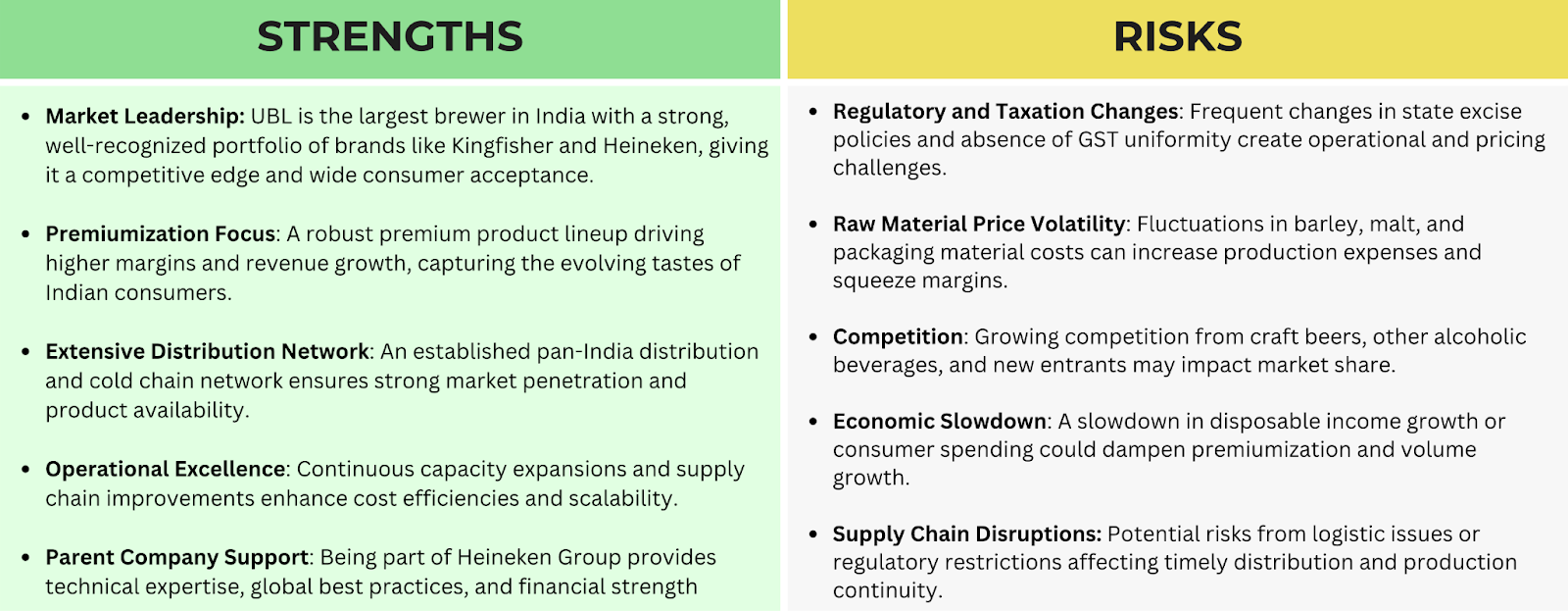
Risk & Strengths
If you an investor who keeps looking for such analysis on small & mid cap stocks, you can join our Emerging Titans model portfolio where we share detailed reports on such ideas. We are SEBI registered Research Analyst (with Registration No. INH000019789)
Disclosure
This article is for educational purposes only and does not constitute investment advice. Readers should consult a SEBI-registered advisor before making investment decisions.
Standard warning
“Investment in securities market are subject to market risks. Read all the related documents carefully before investing.“
Disclaimers
“Registration granted by SEBI, enlistment with RAASB and certification from NISM in no way guarantee performance of the Research Analyst or provide any assurance of returns to investors.”